Floor Plans

Purva Hennur Floor Plans

Purva Hennur floor plans, size ranges, and plan notes.

Unit Mix

Home formats currently surfaced in the project record.

Purva Hennur offers a mix of apartment formats, and the current floor-plan set helps buyers compare size brackets, room hierarchy, and likely day-to-day usability across the premium inventory mix.

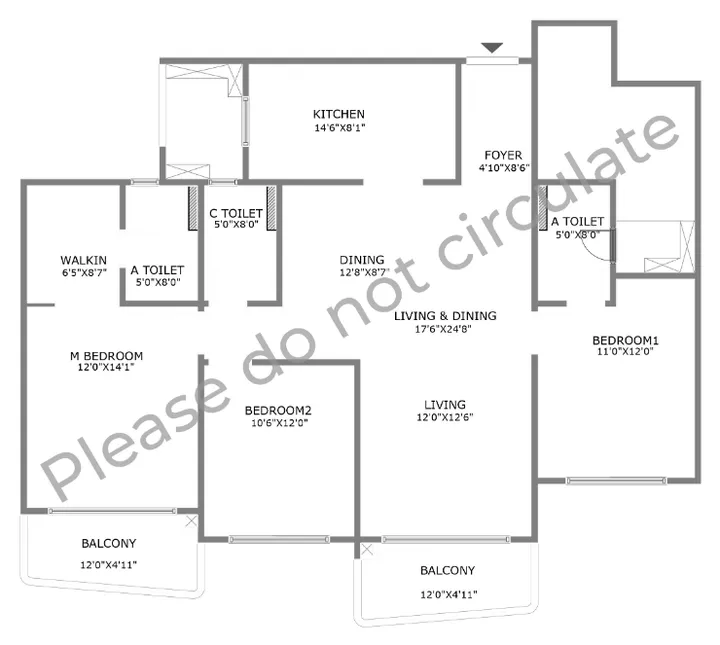
3 BHK

Super Builtup Area: 2,000 sq ft

Indicative price: ₹3.00 Cr onwards

Master BD with walk-in, 2 balconies

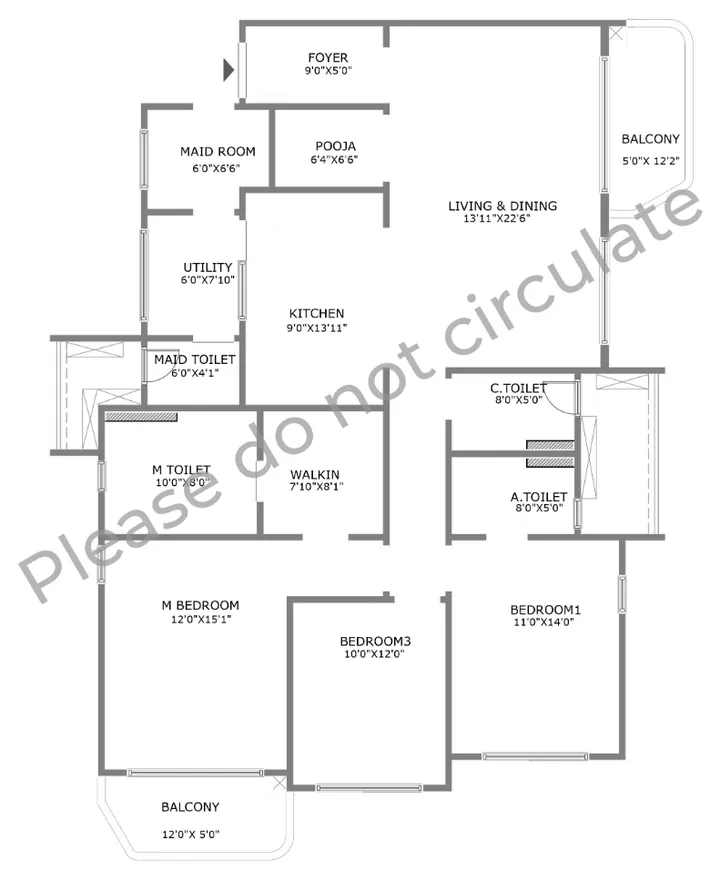
3 BHK + Staff

Super Builtup Area: 2,400 sq ft

Indicative price: ₹3.60 Cr onwards

Includes Pooja room, maid room + toilet, utility area

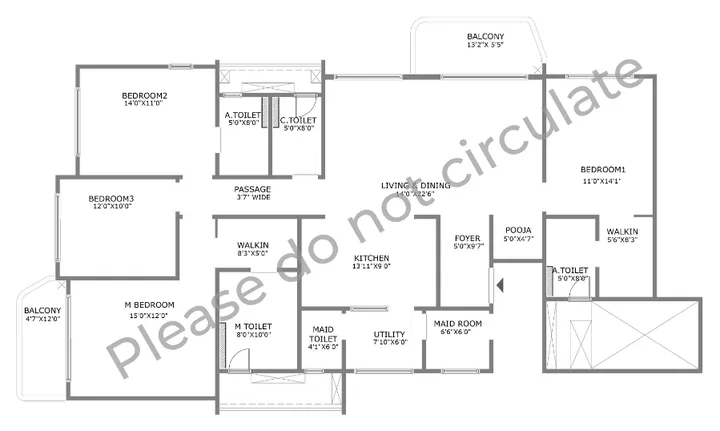
4 BHK + Staff

Super Builtup Area: 2,700 sq ft

Indicative price: ₹4.05 Cr onwards

4 full bedrooms + master walk-in, large living-dining (14' x 32'), maid room

Plan Cards

Visual plan references currently available for research.

Floor plan 2 of Purva Codename Hennur

3 Bhk 2000 Sqft Purva Codename Hennur

Floor plan prepared for Purva Codename Hennur.

Floor plan 3 of Purva Codename Hennur

3 Bhk Staff 2400 Sqft Purva Codename Hennur

Floor plan prepared for Purva Codename Hennur.

Floor plan 4 of Purva Codename Hennur

4 Bhk Staff 2700 Sqft Purva Codename Hennur

Floor plan prepared for Purva Codename Hennur.

Floor plan 1 of Purva Codename Hennur

Plan Spread Floor Plan Purva Codename Hennur

Floor plan prepared for Purva Codename Hennur.

Size Details

How to compare layouts before you shortlist.

For an apartment project, buyers should compare privacy, daylight, balcony usability, kitchen-utility efficiency, and whether the larger-format plans meaningfully improve daily circulation relative to the entry-level unit.

The available planning assets are strong enough for early comparison, but buyers should still request the latest stamped or sales-approved plan set before finalizing any purchase decision.

Reading Notes

The floor-plans page as a decision tool, not just a content page.

Purva Hennur's floor-plans page is meant to reduce guesswork around size and usability. A strong plan page helps a buyer move from broad attraction to practical comparison by clarifying what each configuration appears to offer and how reliable the current visual references actually are. The aim is to turn visible information into a more disciplined shortlist workflow. That is why the page emphasizes verified facts from the structured project record rather than leaning on broad marketing language. If a fact is not locked in with enough confidence, the page is designed to say less, disclose more, and push the buyer toward confirmation rather than assumption.

For Purva Hennur, the verified record currently ties the project to Hennur Main Road, Byreshwara Layout, Bengaluru, a new launch status, 200 homes, and a core mix that includes 3 BHK (2,000 sq ft), 3 BHK + Staff (2,400 sq ft), 4 BHK + Staff (2,700 sq ft). On a page like the floor-plans page, those facts matter because they keep the discussion anchored to what is actually surfaced in the structured source instead of drifting into unsupported brochure exaggeration. This matters because research quality is cumulative. When a buyer builds confidence page by page, it becomes easier to compare projects fairly, notice what is still unclear, and avoid over-committing to a launch-stage story that has not fully matured into contractual certainty.

Interpretation

How to interpret the floor-plans page in the context of Purva Hennur.

When interpreting the floor-plans page for Purva Hennur, the buyer should ask whether the visible details increase conviction or merely increase volume. Strong research pages do not just add more text; they make the project easier to judge. In practical terms, that means checking how the visible facts on this page connect back to the project’s approval stage, the confidence level of the asset set, the realism of the pricing context, and the role this project could play inside a shortlist for North Bangalore. The better question is not only “what is listed here?” but also “what does this signal about project readiness, buyer fit, and comparison value?” That change in perspective is where this page becomes more useful for a real shortlist.

Purva Hennur becomes much easier to compare once the information on this page is translated into shortlist language. The comparison should focus on like-for-like projects with a similar stage, address logic, and ticket band. A buyer who uses the floor-plans page properly will notice whether the project is winning on clarity, losing on unresolved questions, or sitting in the middle with a good story that still needs stronger documentary backup before it can move up the shortlist. When you compare in this way, the strongest parts of the current project record become easier to spot, and so do the gaps that still need follow-up with the project desk or a live site visit.

Due Diligence

Questions and documents that should come next.

Every strong page on Purva Hennur should lead to a document request. From the floor-plans page, the natural next step is to ask for the exact material that would validate the claims shown here: updated cost sheets, revised plan packs, approval documents, project issue notes, or schedule clarifications. That discipline keeps research focused. Instead of asking broad sales questions, the buyer can ask for the one document that resolves the precise uncertainty this page surfaced. This is where serious buyers save time. Instead of asking generic questions, they ask targeted ones that relate directly to the project’s present stage, visible assets, and the exact commercial or planning claims shown on the page.

The follow-up conversation after reading the floor-plans page should be specific enough to save time for both sides. Ask what has changed recently, what is tentative versus finalized, whether the visible figures are current for the present inventory release, and how this page should be read if the buyer is comparing self-use with longer-horizon appreciation. Those questions are simple, but they often expose whether the project desk is offering real clarity or repeating generic launch language. Good follow-up is what turns a brochure site into a real decision resource. The point is not to ask more questions for the sake of activity, but to ask the few questions that reduce risk, clarify cost, and reveal whether the project deserves a place on the final shortlist.

Shortlisting

How this page should influence the next shortlisting step.

A shortlist usually becomes stronger not when more projects are added, but when weaker projects are eliminated. The floor-plans page helps with that elimination process. If the page adds clarity, confirms fit, and reduces risk, the project earns more attention. If it stays vague after a careful read, the project may still be worth a site visit, but it should be ranked more cautiously until documentary evidence improves the picture. If the answers remain vague after you review this page and request the obvious follow-up documents, that itself is a useful signal. In a competitive market, clarity is part of the product.

That is the real role of this page in the buyer journey. It should help answer what comes next: compare layouts, request a cost sheet, verify approvals, inspect the locality, or step back entirely. By building the page around verified data, Purva Hennur is easier to read as a real purchase option. The more disciplined the reader is at this stage, the less likely it is that the shortlist will be shaped by surface-level excitement instead of durable decision logic. The best buyers move through these pages with a simple discipline: understand the visible claim, compare it with the project stage, then decide what must be verified before spending more time. That approach keeps the decision process calm, practical, and less vulnerable to launch-stage noise.

Visit Prep

How to turn page research into a more useful project conversation.

Page-level research is most valuable when it sharpens what you plan to validate next. For Purva Hennur, that means using the floor-plans page to decide whether the next step should be a document request, a sales call, or an actual site visit. If the page already clarifies enough to show a strong fit, the visit can focus on confirmation. If the page still leaves commercial, planning, or compliance gaps, the smarter move is to request the relevant documents before spending time on the ground.

This approach also improves how the buyer compares alternatives. A site visit feels productive when you already know what you are checking: the reality of the location, the feel of the approach road, the accuracy of the amenity and planning story, or the credibility of the cost discussion. The page should therefore act like a preparation layer. By the time you move beyond it, the comparison criteria should be tighter, the open questions should be narrower, and the chance of wasting effort on low-clarity options should be much lower.

Next Step

Need a plan walkthrough or current stack availability?

Use the enquiry page to request project documents, pricing help, or a callback from the project desk.